

People love games.
The global gaming industry is massive. According to BCG, the global gaming revenue is expected to reach $281 billion in 2026.
The industry is also constantly changing.
What is going on?

AAA and indie studios: Who is winning?
In the gaming industry, AAA studios are those with large budgets and workforces to develop ambitious titles such as Call of Duty, League of Legends and Grand Theft Auto. Indie studios are independent developers with fewer resources for game development, marketing communications, etc.
Despite having fewer resources, indie developers are thriving.
According to Bain & Company, from 2018 to 2024, indies’ PC revenues grew at 22% year-over-year, as compared to 8% for AA (mid-sized) and AAA (large-scaled) studios combined. On PC, the share of indie developers increased from 24% in 2018 to 39% in 2024.

Indie developers typically have more streamlined game development processes, and therefore greater agility in responding to market needs. Peak, a co-op indie game developed in just four months by studios Aggro Crab and Landfall, sold over 1 million copies in its first week.
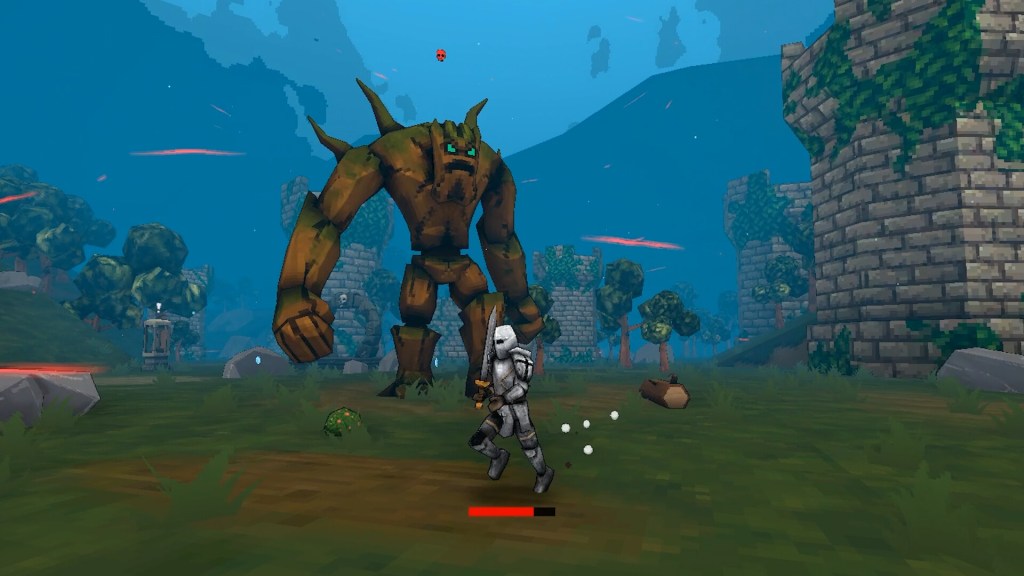
Another indie game, Megabonk, sold over 1 million copies in just two weeks. It even achieved higher player counts than many AAA titles, such as Call of Duty and Borderlands 4, on Steam.

Can AI help?
To respond to the ever-changing gamers’ needs and challenges from indie studios, AAA studios have good opportunities to accelerate their game development processes.
It appears that AI can contribute to this area. One primary use of AI in the gaming industry is to automate manual tasks. According to Globant and Google Cloud, 97% of developers agree that generative AI is reshaping the gaming industry. In the long term, AI may also reduce game development costs.
BCG estimated that about 7,300 games on Steam disclosed AI applications in Q3 2025.
However, when discussing AI’s role in improving the gaming experience, there have been mixed responses.
According to The Verge, many gamers do not respond positively to AI-generated assets due to their lower quality. 2025 Game of the Year winner Clair Obscur: Expedition 33 quietly removed the AI-generated images. Some indie studios even claim to be generative AI-free.
Other arguments concern the use of AI agents, which 87% of developers use according to Globant and Google Cloud. AI agents play a critical role in automating gaming analytics and adjusting game difficulty. Now, weaker players may have a higher chance to win.
Yet, do players really love it? I have just read a Reddit thread. While some weaker players may find it easier to win a game, the stronger players might feel penalized because they believe their win rates are capped.
The power of creators and gaming communities
We should never forget creators when talking about the gaming industry. Like in other industries, user-generated content (UGC) related to gaming is very popular.
First, let’s talk about videos.

1. Videos
While the number of YouTube videos and viewership has not been officially released, it is not surprising to see many gaming-related topics and creators at the top of YouTube’s Global Culture & Trends Report 2025, such as Roblox, Minecraft, Demon Slayer, Nintendo Switch 2, IShowSpeed, CoryxKenshin and CaylusBlox.
These online contents are a primary source of information for gamers. According to Bain & Company, 24% of gamers discover new games through online content creators.
Many indie games have been featured in those videos. No wonder they have surged over the past few years, even though indie developers do not have large media budgets.
Traditionally, larger game developers depend heavily on online distributors, such as Steam on PC and Apple’s App Store and Google Play on mobile. These platforms can charge 30% on each transaction for distribution. With only 12% of gamers discovering new games through digital stores and an objective to protect profit margins, some developers are beginning to question whether these platforms are worth the cost.
As such, larger developers are placing greater emphasis on creators to promote their direct-to-consumer channels now. Bain & Company reports that 65% of large game publishers had content creator programs to generate traffic to their own stores in 2025, a significant increase from 5% in 2019.

2. Games
Creators also develop games, fueling the growth of non-traditional gaming platforms such as Roblox and Fortnite.
Roblox sees a significant increase in the number of developers from 2.8 million in Q4 2024 to 3.5 million in Q3 2025. The 7 million daily active experiences created by these developers are played by over 150 million daily active users across 180 countries now.
Fortnite’s creator community tripled from 23,000 in 2023 to 70,000 in 2024, publishing nearly 200,000 islands (user-created experiences).
The creator economy is huge too. Take Roblox as an example. From 2018 to 2024, Roblox has paid $3.3 billion to its creator community, including $923 million in 2024 alone. This accounts for roughly 28% of spending on experiences. Meanwhile, Roblox retains 33% for its ongoing operating costs, future investments, and profit margins for investors.
That is why both Roblox and Fortnite are actively recruiting creators to develop games on their platforms. With training and tools provided by these platforms, people with no prior game development experience can also join the developer community.
A BCG analysis shows that only about 10% to 15% of gamers had ever created a game or an in-game item in 2025. We all look forward to seeing how the developer community grows.

Cloud gaming: An opportunity for new industry players
Cloud gaming, a method of playing games by streaming them from remote servers without needing dedicated consoles, could become mainstream.
It is gaining popularity. NVIDIA GeForce NOW, a major cloud gaming platform, offers access to over 4,000 games, including top AAA hits, on any device such as PC, mobile and TV.
BCG reports that there were 5 million cloud gaming users globally in 2025. BCG estimates that this number will grow 54% year-over-year, reaching 65 million by 2030 and contributing $18.3 billion to the cloud gaming market.
According to Globant, the success of cloud gaming is the result of a seamless gaming experience driven by advances in 5G, fiber infrastructure and Smart TV support.
With strong future growth potential, new industry players such as Amazon, Netflix, and Apple are working hard to establish their presence in this new revenue stream.

So, what is next?
With all the above observations in the gaming industry, I begin to have the following questions.
- How can developers, especially larger ones, thrive with the ongoing development of AI?
- How will the role of distributors evolve?
- How will game developers, especially the larger ones, strengthen their relationships with influencers and gaming communities?
- Similarly, how will platforms like Roblox and Fortnite continue to promote creativity among curators?
- As cloud gaming gains popularity, how will gamers choose their gaming consoles?
- Grand Theft Auto VI is set to launch in 2026. What will happen by then? (P.S. I have been looking forward to returning to Vice City.)
2026 will be an exciting year for the gaming industry. I look forward to seeing what is next!
Vincent
I am Vincent Kwong, a seasoned consumer planner with nearly two decades of market research and business planning experience on both the agency and client sides. Currently, I am Director & Partner of Intuit Research, a research agency specializing in multi-country market research projects. Companies that I have served in my career include McDonald’s, Diageo, PepsiCo, Estee Lauder, Heineken, GSK, Pizza Hut, Lenovo and HSBC. I am also a part-time instructor at Schulich School of Business, York University in Canada.
 Vincent Kwong
Leave a comment